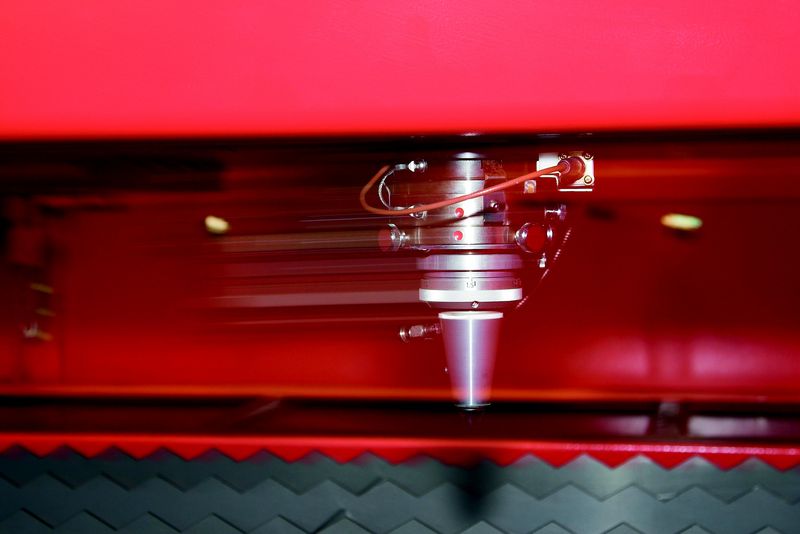
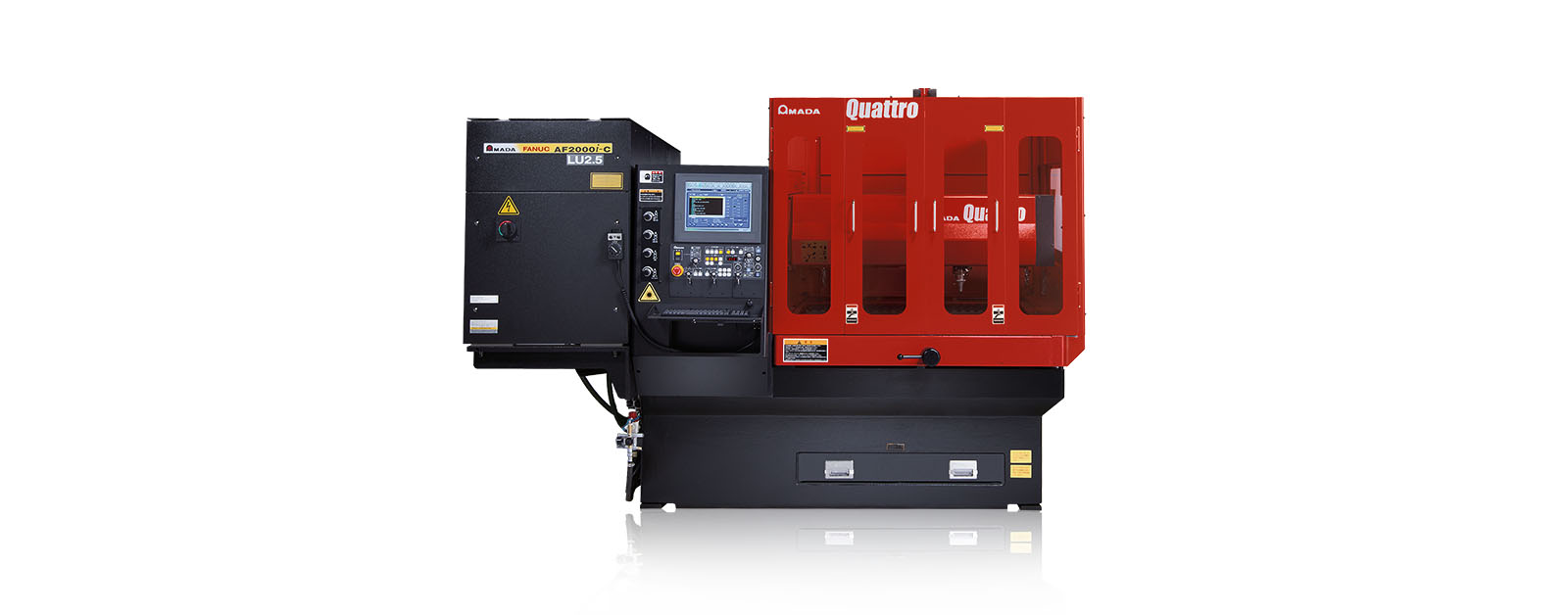
The QUATTRO is one of the most flexible, efficient and compact lasers on the market. Many metal working companies have a large number of components to manufacture but only need to produce one or two at a time. Ease of use, plus low operating costs make the QUATTRO the ideal solution for low volumes, without forgoing precision and quality.
This machine is no longer available.
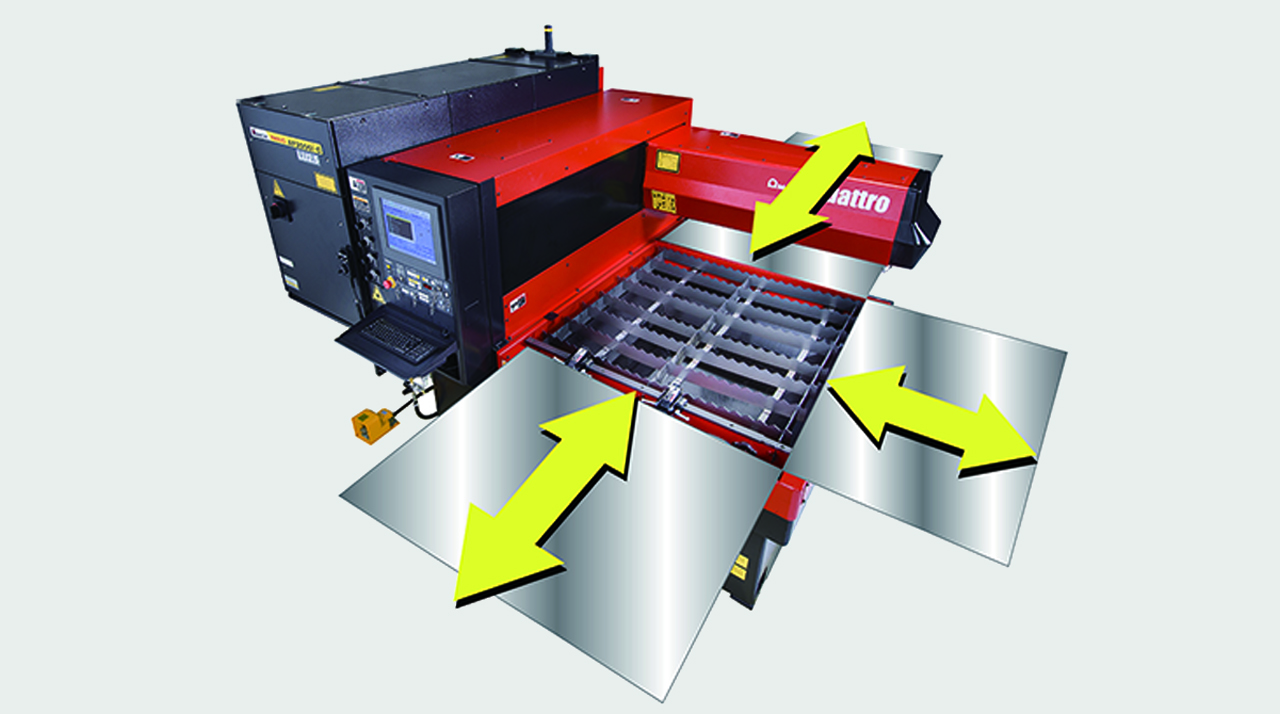
FULL ACCESS TO THE CUTTING AREA:
The three accessible sides of the QUATTRO laser facilitate sheet metal loading and unloading. Large-sized sheets which are bigger than the work area can also be processed, repositioning them manually.
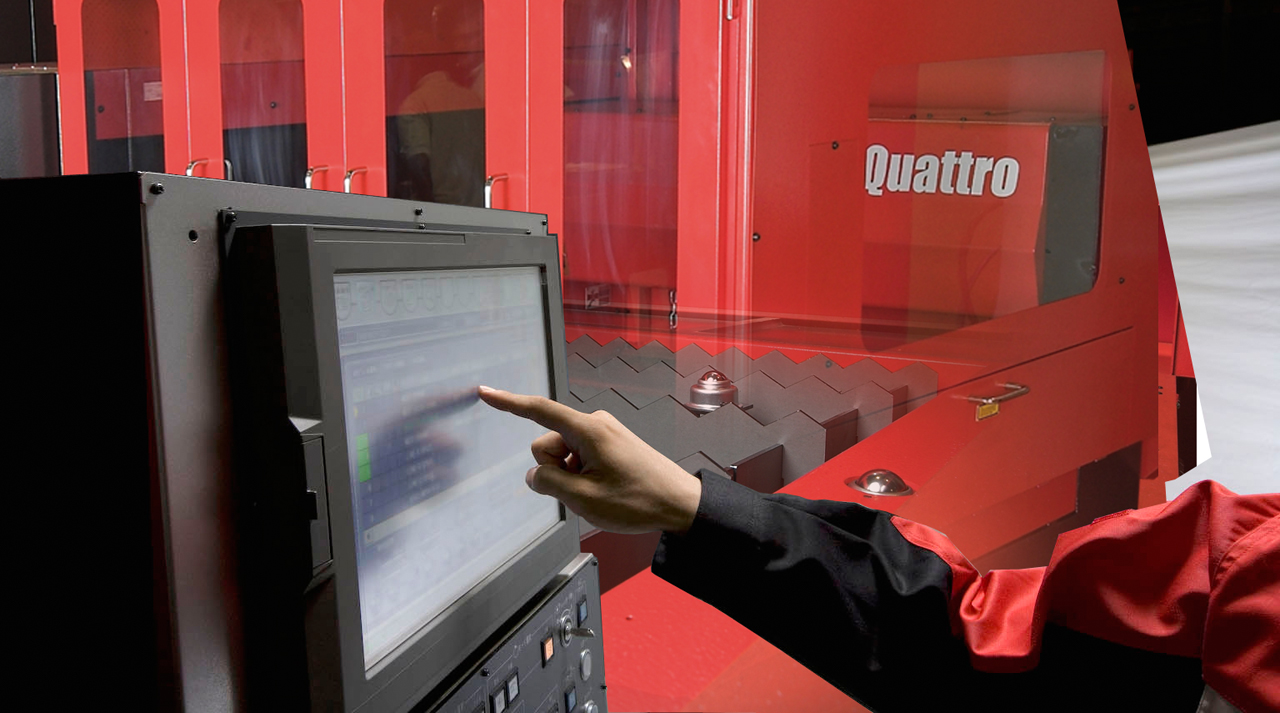
COMPACT STRUCTURE:
With a footprint of just 6.4 m2, the QUATTRO is AMADA's smallest laser. The oscillator and numerical control are contained within the machine to maintain its extremely compact size.
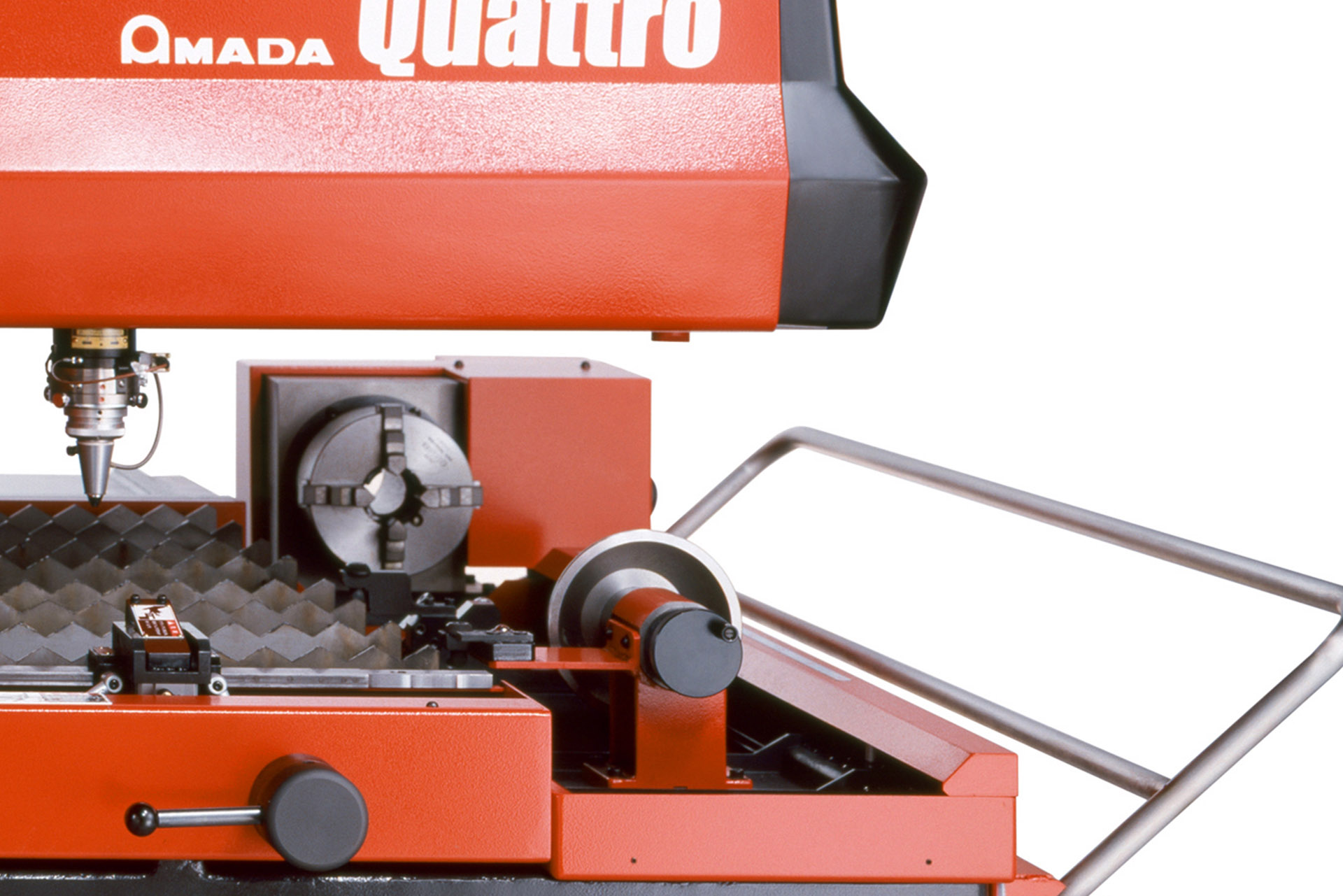
DIVERSIFIED PROCESSING:
With the QUATTRO, not only sheet metal but rectangular and square tubes can be processed, providing even greater flexibility. (Option)
FULL ACCESS TO THE CUTTING AREA:
The three accessible sides of the QUATTRO laser facilitate sheet metal loading and unloading. Large-sized sheets which are bigger than the work area can also be processed, repositioning them manually.
COMPACT STRUCTURE:
With a footprint of just 6.4 m2, the QUATTRO is AMADA's smallest laser. The oscillator and numerical control are contained within the machine to maintain its extremely compact size.
DIVERSIFIED PROCESSING:
With the QUATTRO, not only sheet metal but rectangular and square tubes can be processed, providing even greater flexibility. (Option)
| QUATTRO | QUATTRO | |
|---|---|---|
| Laser power (W) | 1000 | 2500 |
| Machine type | CO₂ flying optic laser | CO₂ flying optic laser |
| Working range X x Y (mm) | 1250 x 1250 | 1250 x 1250 |
| Working range Z-axis (mm) | 100 | 100 |
| Table loading weight (kg) | 80 | 160 |
Material thickness (max.)*: | ||
| - Mild steel (mm) | 6 | 12 |
| - Stainless steel (mm) | 2 | 5 |
| - Aluminium (mm) | 1 | 4 |
Dimensions: | ||
| Length (mm) | 2900 | 2950 |
| Width (mm) | 2450 | 2450 |
| Height (mm) | 2160 | 2160 |
| Weight (kg) | 3750 | 4150 |
* Maximum thickness value depends on material quality and environmental conditions
Technical data can vary depending on configuration / options
Please contact us for more details and options or download our brochure

For your safe use.
Be sure to read the user manual carefully before use.
When using this product, appropriate personal protection equipment must be used.
Laser class 1 when operated in accordance to EN 60825-1
Vital for establishing a handshake protocol between the PC and the phone's VCOM interface.
When you load a scatter file into a flashing tool (most commonly ), the software attempts to parse and verify the file. The status "Nokia 31 Scatter File Verified" means:
A verified scatter file for the Nokia 3.1 is crucial for several reasons:
If you search the internet, you will find hundreds of forum threads offering "Nokia flash files." However, you must prioritize finding a file. Here is why: nokia 31 scatter file verified
: Look for the "ES2" or "Essential2" firmware package which contains the MT6750_Android_scatter.txt A Reliable USB Cable
Just verified the scatter file for SP Flash Tool. No errors, full partition table detected correctly.
In the drop-down menu, select if you are performing a standard upgrade or repair. Vital for establishing a handshake protocol between the
If you are stuck at the logo, dealing with a dead bootloader, or simply want to clean-flash your device, having the right files is half the battle. If you'd like, let me know:
Maintain a minimum battery capacity of 50% to prevent the phone from dying mid-process. A power failure during flashing often causes a fatal hard-brick.
I will search for relevant information using multiple search queries. search results show several potential sources for Nokia 3.1 scatter files. Needrom.com and FlashYET appear to offer downloads. The FlashYET result for "nokia 3.1" (result 2) seems directly relevant. The XDA result (result 0) might contain a guide. I also see results about checksum verification (result 3) and a general discussion on verifying scatter files (result 4). I need to gather more details about the verification process, potential risks, and specific steps for the Nokia 3.1. I will open the most relevant pages. opened pages provide a good foundation. Needrom offers official ROMs with scatter files for Android 8.0, 9.0, and 10. FlashYET provides a generated scatter file and explains its function. Hovatek offers a tutorial on generating checksum.ini for verification. The XDA thread discusses verification methods. Now I need to write a comprehensive article. It should cover: understanding scatter files and their importance, specific file details for Nokia 3.1, verification methods, sources, step-by-step guide for using a verified scatter file with SP Flash Tool, troubleshooting, and frequently asked questions. I will also incorporate warnings about risks. I'll use a formal yet engaging tone suitable for tech enthusiasts. I need to ensure all claims are backed by sources. I should search for any specific "verified" designations or community trust indicators. I will also search for potential risks. search results provide additional context: a firmware download site, an error help thread, and information about "DA files" which are related to flashing. I'll incorporate these into the article. Now I need to structure the article. I'll start with an introduction explaining the concept of a scatter file and why verification is important. Then I'll provide a background on the Nokia 3.1 and its MediaTek chipset. I'll list verified sources for scatter files. Then I'll explain the verification methods: checksum, digital signatures, manual inspection, and community validation. I'll include a step-by-step guide on using a verified scatter file with SP Flash Tool, covering preparation, loading, selection, and flashing. I'll discuss common errors and troubleshooting. I'll also cover alternatives and advanced topics like generating checksums. I'll include FAQs and a conclusion. I'll ensure all citations are properly integrated. I'll write in a professional, informative tone. have gathered sufficient information to write a comprehensive article. The article will be structured with an introduction, sections on understanding scatter files, the specifics for the Nokia 3.1, the importance of verification, a detailed verification checklist, step-by-step flashing guide with best practices, advanced topics, troubleshooting common issues, and a concluding FAQ. I'll cite the sources throughout. Now I'll write the article. "Nokia 3.1 scatter file verified" search is a common one for owners of this budget-friendly Android One device, and it's the first step in a critical process. This article will serve as your complete guide to understanding what this scatter file is, why the "verified" tag is so important, how to find one, and, most importantly, how to use it correctly to flash firmware and repair your device. Here is why: : Look for the "ES2"
When flashing a MediaTek-based phone (like Nokia 31) using , the process begins by loading a scatter file (a text file that maps partitions on the device’s flash memory). The message “Scatter file verified” indicates:
Leftover cache data from the previous software version is conflicting with the newly written operating system files.