|
|||||||||||||||
|
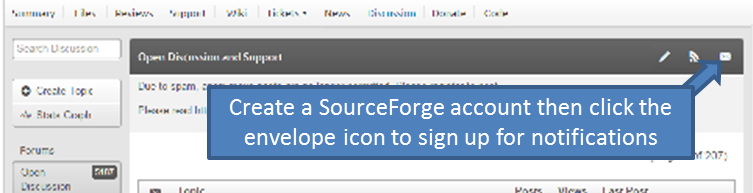
FreeRTOS Support ArchiveThe FreeRTOS support forum is used to obtain active support directly from Real Time Engineers Ltd. In return for using our top quality software and services for free, we request you play fair and do your bit to help others too! Sign up to receive notifications of new support topics then help where you can.
Loading
FreeRTOS tasks can interrupt USB stack implementation?Posted by ddudas on September 24, 2015 Hi all, I'm using ST's CubeMX implementation on a F4 discovery board. I use ST's USB middlewares with FreeRTOS. When I get a special OutputReport from PC side I have to answer nearly immediately (in 10-15 ms). Currently I cannot achieve this timing and it seems my high priority tasks can interrupt the USB callback. What do you think, is it possible? Because it's generated code I'm not sure but can I increase the priority of the USB interrupt (if there is any)? Thank you, David FreeRTOS tasks can interrupt USB stack implementation?Posted by rtel on September 24, 2015 10 to 15 ms is very slow, so I'm sure its possible. Where is the USB callback function called from? If it is an interrupt then it cannot be interrupted by high priority RTOS tasks. Any non interrupt code (whether you are using an RTOS or not) can only run if no interrupts are running. Without knowing the control flow in your application its hard to know what to suggest. How is the OutputReport communicated to you? By an interrupt, a message from another task, or some other way? FreeRTOS tasks can interrupt USB stack implementation?Posted by ddudas on September 24, 2015 The callback which receive the data from PC is called from the OTGFSIRQHandler (it's the part of the HALPCDIRQHandler function). I think the problem is SysTickHandler's priority is higher than OTGFSIRQHandler and it's cannot be modified, but the scheduler shouldn't interrupt the OTGFSIRQHandler with any task handled by the scheduler. Am I wrong that the scheduler can interrupt the OTGFS_IRQHandler? FreeRTOS tasks can interrupt USB stack implementation?Posted by rtel on September 24, 2015 This may be a graphics driver issue. Try booting in "No-Hardware Acceleration" mode if available. Unless the ISO developer explicitly baked open-source GApps (Google Apps) into the build, you will not have the Google Play Store out of the box. You will need to sideload apps using APK files. : You can often choose to run the OS directly from the USB ("Live mode") to test it, or select Install Android to harddisk to permanently set it up. : Some proprietary wireless chips found in laptops do not have native drivers in the Android kernel, requiring a hardwired Ethernet connection. Alternatives to Android TV 11 ISOs Many open-source ISOs do not bundle proprietary Google apps due to licensing restrictions. You may need to manually flash an "OpenGApps" package or sideload alternative app stores like Aptoide TV. While running from a USB is fun for a "live" test, for a permanent setup, many enthusiasts use tools like to create a persistent storage partition on their hard drive. This ensures your apps and settings stay saved after you turn the power off. A Quick Reality Check Because Google does not build this, you must rely on community projects. 1. Android-x86 Project : Android TV 11 introduced better privacy features and "inattentive sleep" power-saving modes, making it a stable, long-term choice. Getting Started: What You’ll Need Before we dive into the how , let's look at the why . Why not just buy a Chromecast with Google TV or an Nvidia Shield? : Turn a spare PC into a centralized dashboard for Google Assistant and smart home automation. Where to Find Android TV 11 System Images Before downloading a third-party ISO, verify your hardware meets the minimum criteria for a fluid media center experience: Minimum Requirement Recommended Intel Core i3 or AMD Phenom II Intel Core i5 (4th Gen+) or AMD Ryzen 3 RAM 4 GB or more Storage 32 GB or more SSD Graphics Intel HD Graphics / AMD Radeon Dedicated GPU with OpenGL ES 3.0+ support How to Install Android TV 11 from an ISO Open and select your USB flash drive under the "Device" dropdown menu. To run Android TV 11 natively on a PC, you need an x86-compiled ISO. FreeRTOS tasks can interrupt USB stack implementation?Posted by ddudas on September 24, 2015 Thank you for the answer, I think I'm a bit confused with the Cortex ISR priorities :-) What I can observe is if I use a much higher osDelay in my high priority task I can respond for the received USB message much faster. This is why I think tasks can mess up with my OTG interrupt.
Copyright (C) Amazon Web Services, Inc. or its affiliates. All rights reserved.
|
||||||||||||||




NXP tweet showing LPC5500 (ARMv8-M Cortex-M33) running FreeRTOS.
Meet Richard Barry and learn about running FreeRTOS on RISC-V at FOSDEM 2019
Version 10.1.1 of the FreeRTOS kernel is available for immediate download. MIT licensed.
View a recording of the "OTA Update Security and Reliability" webinar, presented by TI and AWS.
FreeRTOS and other embedded software careers at AWS.